

the PFPT treatment approach
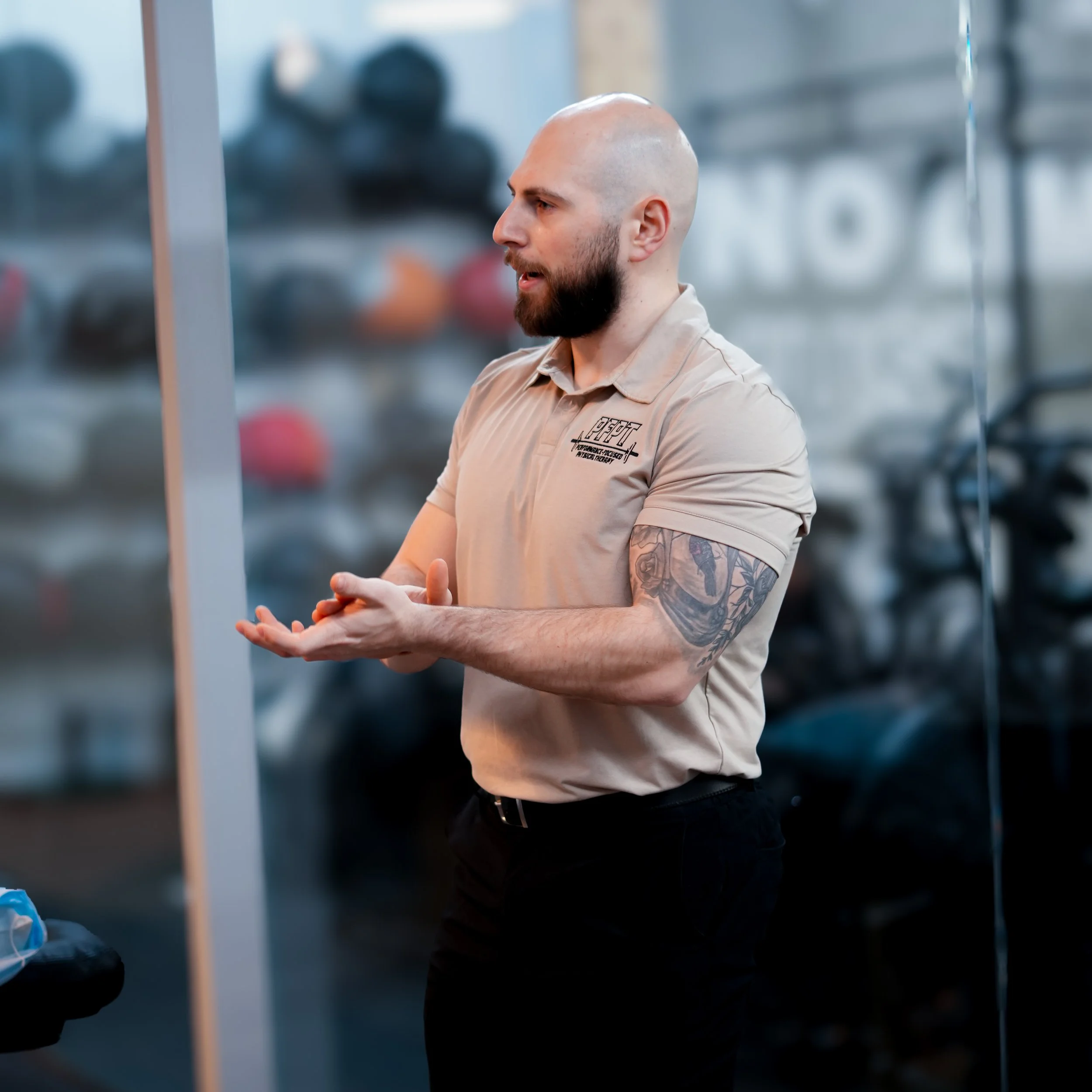
How We Think, Assess, and Treat
At PFPT, our approach is built on a simple idea: We don’t just treat symptoms. We identify and address the reason they exist in the first place.
This allows us to create care that is more targeted, more efficient, and more effective over the long term.
We Start With the “Why”
If something hurts, feels tight, or isn’t performing the way it should, the first question we ask is:
Why is this happening?
Not just where it hurts, but:
What led to it
What’s contributing to it
Why your body is adapting the way it is
If something isn’t improving despite repeated treatment, it’s usually a sign the true source hasn’t been addressed yet.
A Full-System Approach
Your body doesn’t work in isolated parts and neither do we.
While we always assess the area of concern, we also look at how the entire system is working together.
Often, the source of the issue is not where the symptoms show up.
For example:
Knee pain may be influenced by how the pelvis or foot is functioning
Shoulder issues may relate to how the ribcage or shoulder blade move
We focus on finding the “rate-limiting factor,” the piece of the system that’s holding everything back.
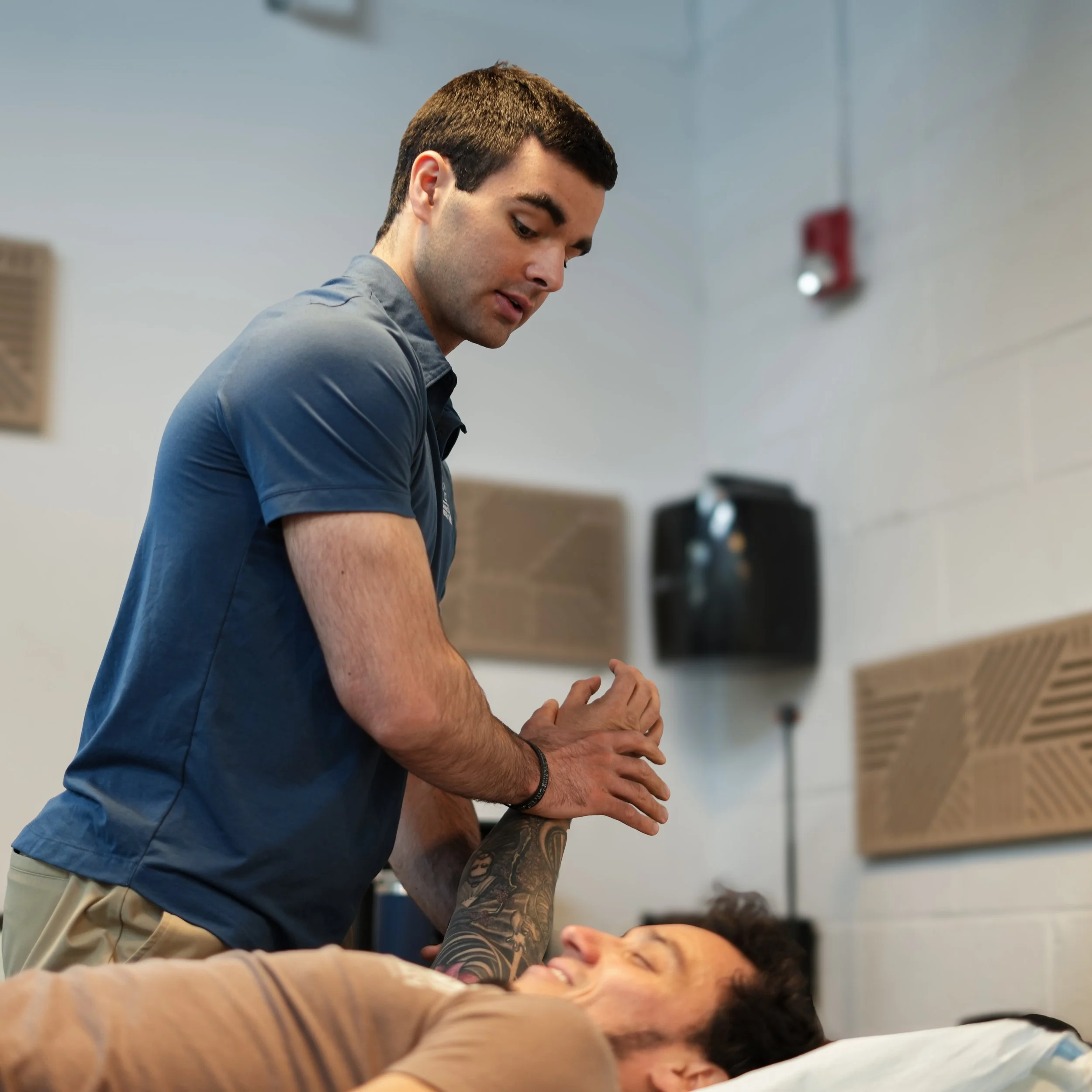
Proximal Control Drives Distal Performance
One of our core principles: How your body is positioned and controlled at the center (ribcage and pelvis) directly impacts how your arms and legs function.
If the foundation isn’t working well, the rest of the system will compensate.
That’s why we often start by improving:
Pelvic and ribcage positioning
Control
Breathing and pressure management
From there, we reassess and see what changes downstream.
Movement Is More Than Muscles
Movement is not just about strength or flexibility. It’s built on rotation.
At its core, your body is constantly shifting between:
Rotating inward to create force
Rotating outward to create space
Think about a baseball throw:
The wind-up creates space (external rotation)
The throw delivers force (internal rotation)
The same concept shows up everywhere
When babies first learn to stand, their legs naturally turn inward to push into the ground and create stability. When you walk, run, or lift, your body is constantly moving through these same patterns, creating space, then producing force.
Even our anatomy is designed this way. From the structure of the Achilles tendon to the way muscles attach and function, the body operates through spirals and rotations, not straight lines.
Why This Matters
If your body can’t move through these rotational patterns efficiently:
Your body will produce the internal rotation elsewhere in the lower or upper body
You may lose the ability to create force or to do it most efficiently
You may lose access to certain positions
You may compensate in ways that lead to pain or limitation over time
Our job is to restore those movement options, so your body can rotate, absorb, and produce force the way it’s designed to from its foundation - the pelvis and the ribcage.
Breathing & Pressure Matter More Than You Think
Breathing isn’t just about oxygen. It plays a major role in:
Stability
Positioning
Force production
Gravity pushes down on all of us. Now you add external loads and stressors, the demand for generating counterpressure against the load increases. How you manage pressure in your body affects how you:
Move
Produce Force
Run
Recover
This is often a missing piece in both rehab and performance, and a key part of how we help patients improve.
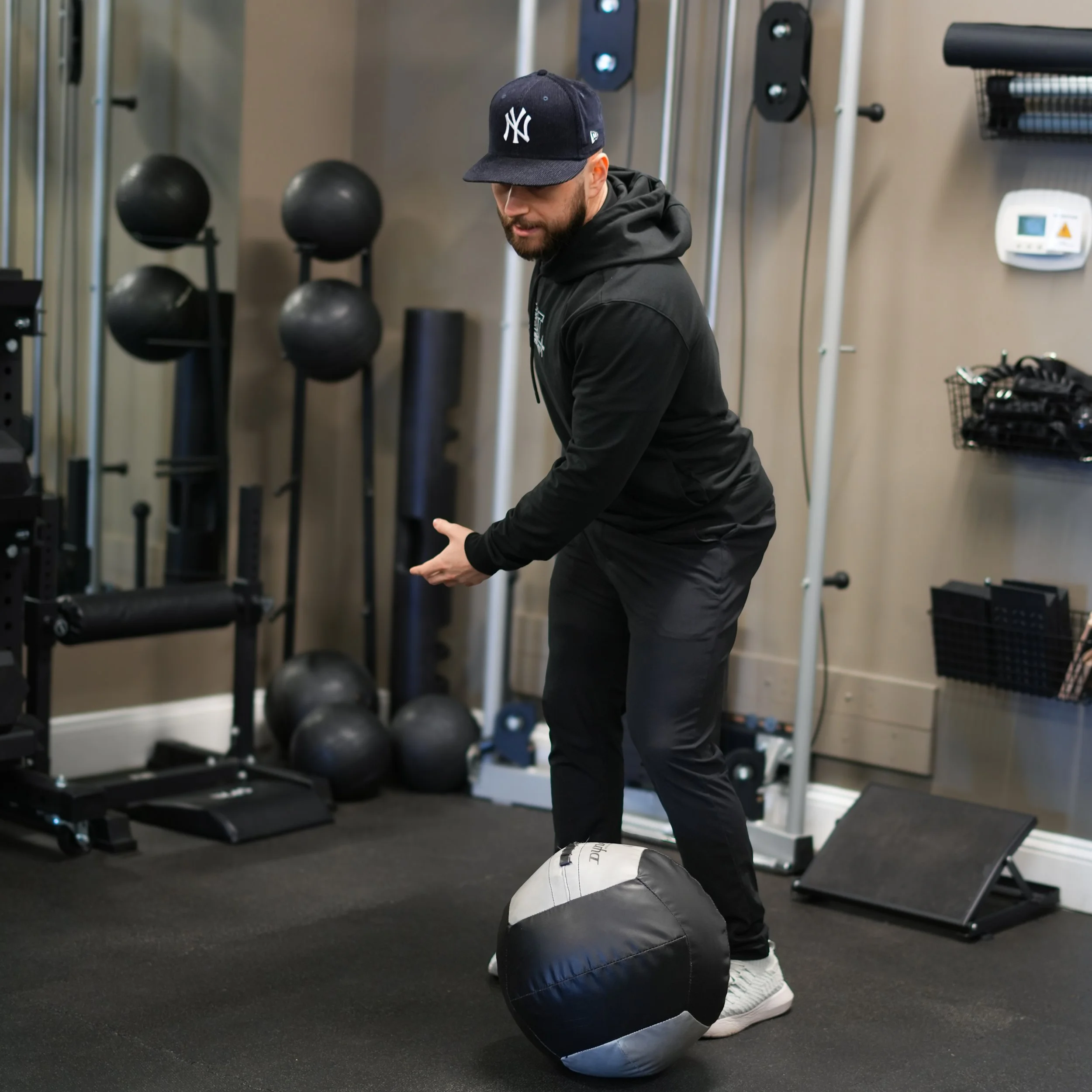
Every Adaptation Has a Trade-Off
Your body adapts to whatever you do most. That’s a good thing, but it comes with trade-offs.
We help you:
Understand those trade-offs
Restore movement options
Continue training without constantly getting set back
It’s Not Just Physical
We also consider the full picture:
Your goals
Your training background
Your lifestyle and stress
Your previous experiences with pain or injury
Because lasting results require more than just physical changes. They require alignment with what actually matters to you.
What This Means For You
This model allows us to:
Be more precise in what we target
Avoid wasting time on things that don’t drive change
Help you progress faster with fewer setbacks
Whether your goal is to get out of pain or perform at a higher level, the process is the same:
Understand the system → Address the root → Build you back stronger
Bottom Line
We don’t chase symptoms.
We identify what’s limiting you, address it directly, and build a plan that keeps you moving forward.